





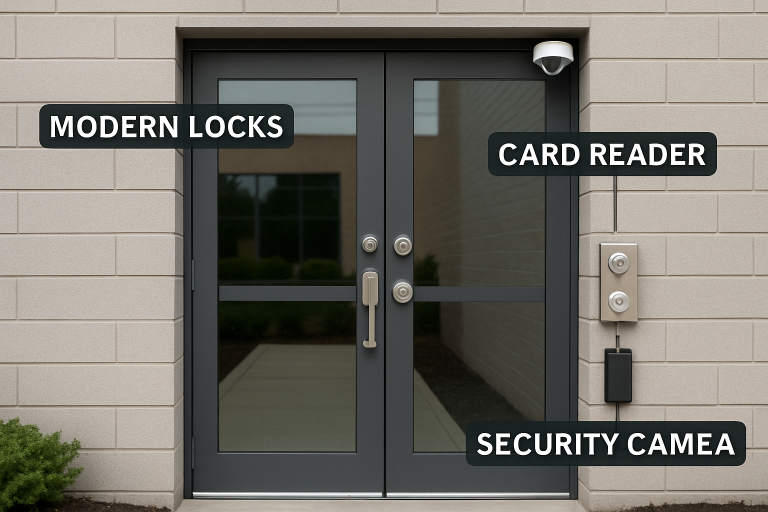
Businesses in today’s world face a growing landscape of threats, ranging from highly organized burglary attempts to digital security breaches that target valuable assets and sensitive data. With professional crime continually evolving, commercial property owners and managers must adopt security solutions that anticipate and deter these threats. As physical security merges with digital safeguards, leveraging commercial locksmith services Maitland is becoming a crucial component of a comprehensive security plan. These experts not only install robust locking mechanisms but also guide their clients toward adopting integrated, up-to-date systems designed for the threats of today and tomorrow.
Security is no longer confined to just strong locks on doors; it’s about having a comprehensive approach that protects people, property, and information. Companies face heightened risks from increasingly sophisticated criminals who use covert tactics and advanced technology to breach outdated security setups. This reality highlights the crucial role of modern locksmith services, which provide a range of services from emergency rekeying to state-of-the-art access control. Thoughtful planning, coupled with ongoing support from trained professionals, can determine whether a business remains secure or becomes a target for attack.
Surprisingly, cyber-physical attacks—a blend of digital and physical intrusion—are on the rise, affecting even small to midsize businesses. Besides the enormous financial impact, security breaches can damage a company’s reputation and impact employee safety. These risks make a compelling case for blending advanced access technology and human expertise across a business’s security strategy.
To further explore how businesses can safeguard against such evolving threats, see the advice offered by leading security experts in this Forbes article on the most significant risks facing businesses today.
Rising Threats to Commercial Security
Commercial properties today face a broad range of threats that test the limits of conventional security strategies. From coordinated “smash and grab” robberies in retail environments to breaches enabled by the Internet of Things and remote access hacks, the spectrum of risk is wider than ever. Alarmingly, some attackers exploit weak links in physical entry points, often bypassing outdated locks, access cards, or alarm systems. As highlighted in this Forbes article on overlooked hackable business systems, even minor lapses in physical security can result in substantial financial losses for commercial operators.
Role of Commercial Locksmith Services
Modern locksmiths offer far more than lock installation. Their expertise encompasses designing integrated security solutions, managing controlled access zones, and responding rapidly to emergencies. By conducting thorough assessments, locksmiths can identify specific points of vulnerability in a business, such as aging doors, mismatched hardware, or poor key management practices. This proactive approach to security sharply reduces the risk of successful break-ins or internal theft.
Advanced Access Control Systems
Contemporary locksmiths are trained to recommend and install advanced access control systems. These solutions combine mechanical security with digital control, such as programmable magnetic key cards, biometric scanners, and remotely monitored entryways. The ability to restrict access and instantly update permissions is invaluable, especially in multi-tenant or high-turnover environments. Additionally, logging entry and exit times helps deter both unauthorized staff access and potential outside threats.
Biometric Security Measures
Biometrics—most commonly fingerprint and facial recognition—are gaining traction as a secure alternative to traditional keys or PINs. These systems provide robust authentication and can be particularly beneficial for areas holding sensitive data or valuable assets. By eliminating the risks associated with lost, stolen, or copied keys, biometric controls enhance both convenience and security accountability.
AI-Powered Surveillance
Surveillance technology now leverages artificial intelligence to offer real-time behavioral analysis and automated alerts. AI-powered cameras can differentiate between normal operations and suspicious movements, flagging incidents before they escalate. Integration with access controls allows for immediate lockdowns or restricted movement, creating a multi-layered defense system that adapts to the context of each alarm or event.
Emergency Lockout and Rekeying Services
Lockouts, whether due to misplaced keys or terminated employees, can bring business activity to a frustrating halt. Professional locksmiths offer swift emergency lockout and rekeying services, enabling continued operations with minimal disruption. Rekeying is especially crucial after staff transitions, as it ensures that old keys (and former employees) no longer have access to the property, mitigating internal security risks without the expense of complete hardware replacement.
Importance of Regular Security Audits
Routine security assessments by a qualified locksmith are crucial for staying ahead of evolving threats and technological advancements. These audits evaluate existing systems, recommend improvements, and prioritize upgrades to address new vulnerabilities. Regular checkups also foster a culture of security awareness among staff, helping businesses stay resilient against emerging risks.
Conclusion
With commercial threats growing in both complexity and frequency, businesses must approach security as a dynamic, ongoing process. Leveraging the full spectrum of modern locksmith services—from access controls to biometric solutions and AI-enabled surveillance—can transform a property’s security posture from reactive to proactive. Trusting a seasoned locksmith for regular audits, emergency response, and technology integration is integral to protecting people, assets, and information in today’s high-risk environment.