




Key Takeaways
- Hybrid work models are rapidly becoming the norm, influencing the demand for versatile, tech-rich environments.
- Coworking spaces are investing in amenities that foster wellness and community, supporting holistic professional growth.
- Smart technology and sustainability are critical components of tomorrow’s workplaces.
As today’s working world rapidly evolves, the demand for environments that support adaptability, collaboration, and well-being continues to rise. Modern professionals are shifting away from static offices and seeking flexibility in where, when, and how they work. Whether in major cities or suburban areas, the availability of diverse workspace options has never been more significant. Many professionals now turn to co-working Boston MA, spaces and providers to access cutting-edge facilities tailored to their needs.
This guided transformation goes beyond convenience or cost savings. Flexible workspaces are now hubs of technology, sustainability, and community, setting a new standard for productivity and job satisfaction. As companies embrace these advancements, the lines between home, traditional office, and coworking locations are increasingly blurred in favor of dynamic solutions that adapt to the rhythm of modern workstyles.
Embracing Hybrid Work Models
The hybrid work revolution has permanently altered how professionals engage with their workspaces. A growing number of employees now split their week among home offices, traditional workspaces, and coworking hubs. According to a recent Gallup workplace poll, a majority of global professionals indicate that flexibility in location and schedule significantly enhances job satisfaction and work-life balance. In 2024, fifty-one percent of workers worldwide reported participating in hybrid work models, up substantially from previous years. This trend underscores the need for workspaces to offer both adaptability and seamless technology integration.
Prioritizing Wellness and Community
Flexible workspaces have gone far beyond simply offering a place to sit. Today’s leading coworking facilities provide amenities focused on wellness and community building. Features such as fitness areas, meditation rooms, and social gathering events are standard, aiming to stave off burnout and foster genuine connection among members. One pioneering office in New York created an indoor garden and relaxation pods to support employee well-being and creative thought processes. Integrating nature and thoughtfully designed gathering spaces resonates with today’s professionals, reinforcing the value of employee-centered environments.
Integrating Smart Technology
Technology is central to the appeal and functionality of modern flexible workspaces. Integrated systems, such as cloud-based booking platforms and Internet of Things (IoT) devices, enable spaces to adapt in real time to user needs. For example, a microservice architecture paired with IoT sensors can automatically adjust lighting and heating, or even allocate conference rooms, based on occupancy patterns. This level of personalization keeps productivity high and ensures a tailored experience for every user. For more context on how smart offices are evolving globally, consult recent industry analysis from Forbes.
Focusing on Sustainability
Sustainability features are taking center stage in the development of new flexible workspaces. Facility managers are turning to recycled construction materials, energy-efficient climate systems, and smart lighting solutions to reduce carbon footprints. For instance, some coworking companies have partnered with energy firms to install solar panels and invest in low-energy audiovisual setups with minimal environmental impact. These sustainable choices are proving attractive not only for their ecological benefits but also for their ability to enhance employee satisfaction and brand reputation. Insights from CNBC highlight why green initiatives are now a critical consideration for workspace providers.
Designing for Flexibility
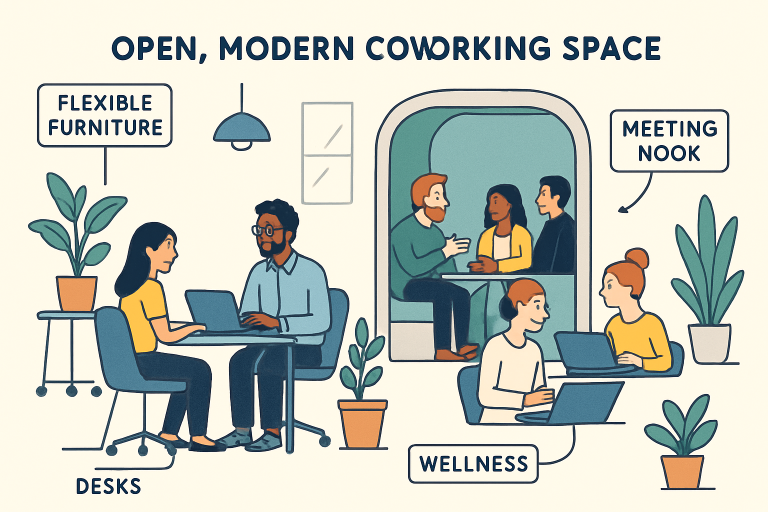
Innovative design principles lie at the heart of successful flexible workspaces. Movable partitions, ergonomic seating, and adjustable lighting create environments that accommodate both collaborative meetings and solo focus. An emerging trend includes “upholstered felt landscapes,” which can be easily reconfigured for different events or working groups. This modular approach appeals to startups, freelancers, and large organizations alike, breaking down the rigid barriers of traditional office architecture and enabling a more fluid way of working.
Enterprise Adoption of Flexible Spaces
Major organizations are leading the way in adopting flexible workspace models. In 2024, 70% of coworking agreements involved companies with more than 1,000 employees, illustrating a marked shift away from conventional long-term leases. Large enterprises cite benefits like cost control, scalable office footprints, and improved talent recruitment as key motivations. Flexible office providers who can accommodate rapid growth, fluctuating team sizes, and workplace experience demands are set to thrive in this expanding market.
Future Outlook
The future of flexible workspaces is set for ongoing transformation and rapid innovation. Prioritizing advanced technology, employee wellness, and sustainable operations allows workspace providers to appeal to today’s professionals while enhancing productivity and satisfaction. As hybrid work models become standard, organizations increasingly recognize the importance of creating environments that support mental health, collaboration, and work-life balance. Modern workspaces will need to be adaptable, offering a mix of private, collaborative, and wellness-focused areas. By aligning design and services with the shifting priorities of both businesses and employees, these spaces will remain relevant, engaging, and future-ready for years to come.
READ ALSO: How Attack Simulations Shed Light on Hidden Security Risks